Understanding the intellectual evolution of Islamic education in the Indian subcontinent requires a deep dive into the archival foundations and enduring milestones of classical learning. When scholars and historians analyze the pedagogical turning points of the eighteenth century, examining Calcutta Madrasa History becomes an essential endeavor for understanding how traditional Islamic scholarship adapted to institutionalized academic frameworks. The study of Calcutta Madrasa History reveals how classical Arabic linguistics, Islamic jurisprudence (Fiqh), and the structured Dars-e-Nizami curriculum gained formal academic prominence across Bengal and the wider subcontinent. At Maulana Arabic Madrasa in New Delhi, our academic philosophy draws profound inspiration from these historic scholastic traditions, offering students a serene environment where sacred knowledge, linguistic eloquence, and prophetic morals are cultivated with classical authenticity and modern pedagogical clarity.
The Formative Era and Inception of Madrasah-i-Aliya
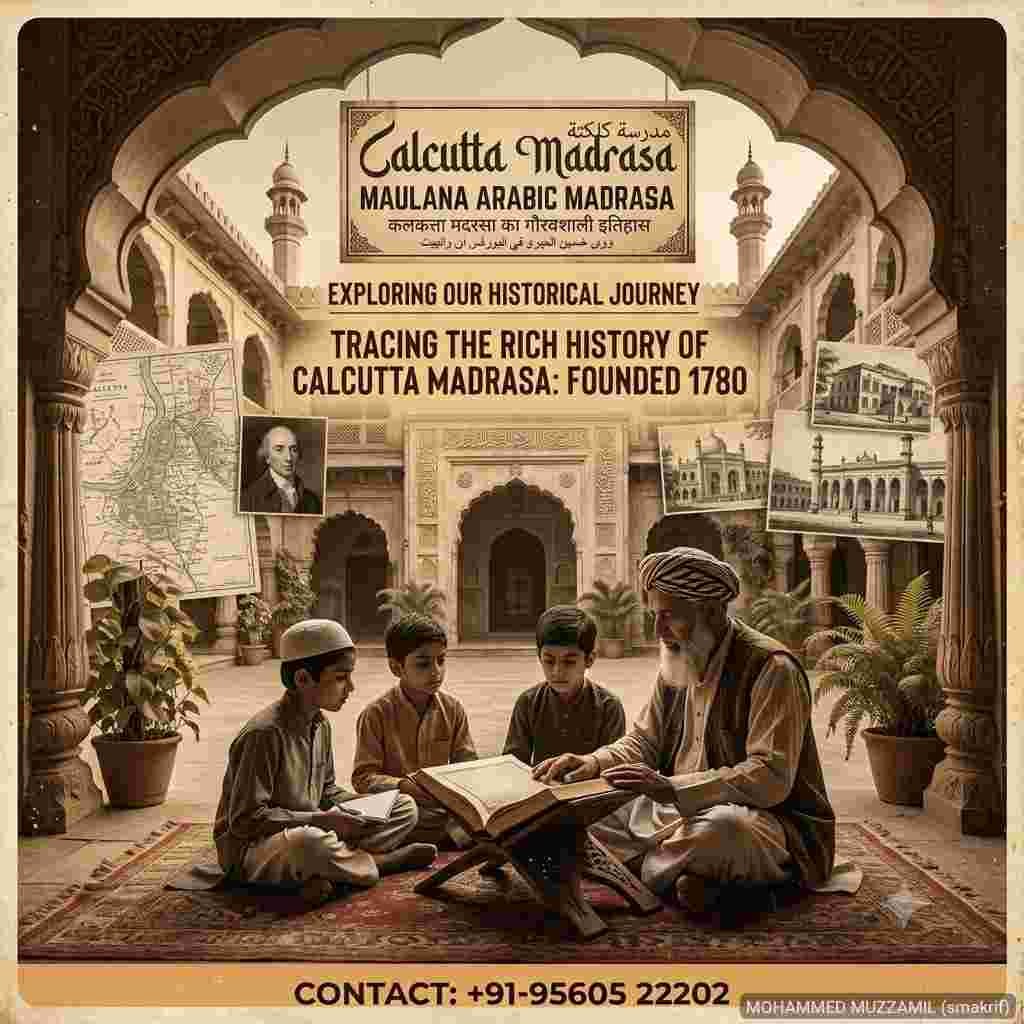
Founded in October 1780 by Warren Hastings at the request of local Muslim scholars, the Calcutta Madrasa (initially known as the Mohammedan College of Calcutta or Madrasah-i-Aliya) marked the first major state-patronized educational institution established under British administration in India. Its foundational objective was to train scholars, jurists, and administrators proficient in Arabic, Persian, and Islamic jurisprudence to serve in the judiciary and civil administration.
Studying the early chapters of Calcutta Madrasa History shows how traditional scholars like Mulla Majd-ud-Din, its first preceptor, brought classical standards of scholarship into a formalized classroom setting. This pivotal experiment demonstrated that classical languages and religious sciences could flourish within structured institutional settings, setting a precedent that influenced educational reform across northern India for generations.
The Enduring Influence of Dars-e-Nizami on Islamic Institutions
A central feature documented throughout the archives of Calcutta Madrasa History is the systematic implementation of the Dars-e-Nizami syllabus. Formulated by Mulla Nizamuddin Sihalivi in the eighteenth century, this curriculum prioritized intellectual discipline, linguistic precision, logic (Mantiq), and philosophical theology alongside primary scriptural studies.
At Maulana Arabic Madrasa, we preserve this authentic scholarly spirit while adapting its instructional methodology to meet contemporary needs. Rather than treating classical texts as mere historical artifacts, our faculty guides learners through line-by-line textual analyses of classical works in morphology (Sarf), syntax (Nahw), rhetoric (Balaghah), and jurisprudence (Fiqh). This balance ensures that students develop both sharp analytical reasoning and deep spiritual reverence.
Comprehensive Core Curriculum: Rooted in Classical Tradition
Drawing continuous pedagogical inspiration from classical institutions preserved in Calcutta Madrasa History, Maulana Arabic Madrasa provides an expansive academic curriculum structured into progressive learning tiers:
Arabic Morphology and Syntax (Sarf & Nahw): Intensive foundational drills in root derivations, verb conjugations, and syntactic analysis enabling students to read unvocalized Arabic manuscripts independently.
Quranic Exegesis and Principles (Usool-al-Tafseer): Rigorous study of classical commentaries, linguistic nuances, and historical contexts of revelation (Asbab al-Nuzul).
Prophetic Traditions and Transmission (Hadith & Usool-al-Hadith): In-depth textual readings of canonical compilations, chain analysis (Isnad), and the critical evaluation of narrators.
Islamic Jurisprudence and Legal Theory (Fiqh & Usool-al-Fiqh): Comprehensive study of classical jurisprudence, business ethics, family laws, and comparative legal logic.
Logic, Philosophy, and Creed (Mantiq & Aqeedah): Equipping students with rational debate methods, philosophical literacy, and orthodox theological clarity.
A Disciplined Daily Blueprint for Scholarly Character
The historical records detailing the life of students in classical academies reflect a profound dedication to character building (Tarbiyah). Upholding the high moral benchmarks evident in Calcutta Madrasa History, our academy implements a structured daily routine that balances intellectual effort with spiritual discipline:
Step 1: Punctuality in Congregational Prayers: Offering all five daily prayers in congregation to cultivate natural mindfulness, humility, and communal unity.
Step 2: Pre-Dawn and Morning Study (Mutala’ah): Dedicated post-Fajr quiet hours where learners review upcoming classical texts before lectures begin.
Step 3: Interactive Textual Breakdown: Daily classroom sessions involving line-by-line reading, grammatical parsing, and thematic discussion with senior scholars.
Step 4: Oratory and Research Seminars: Weekly student speech clubs and writing circles that train candidates to research contemporary issues and articulate classical perspectives with clarity.
Manuscript Libraries and Modern Educational Resources
One of the defining legacies celebrated in the study of Calcutta Madrasa History was its historic collection of rare Arabic, Persian, and Urdu manuscripts, which served as a vital intellectual beacon for researchers across the East. Preserving an extensive library of authentic reference works remains a foundational pillar for any serious institution of sacred learning.
At Maulana Arabic Madrasa, our on-campus research reading rooms house standard classical commentaries, dictionaries, theological treatises, and contemporary academic publications. This rich repository ensures that students have immediate access to primary sources, allowing them to verify texts, compare classical juristic opinions, and conduct meaningful independent research.
Adapting Traditional Pedagogical Wisdom for the 21st Century
While historical seminaries operated in a world of handwritten folios and physical assemblies, modern institutions must embrace technological advancements to keep sacred knowledge accessible. To carry the intellectual legacy documented in Calcutta Madrasa History into the modern era, Maulana Arabic Madrasa utilizes a versatile hybrid learning platform.
Students who cannot attend full-time physical classes due to university studies or professional commitments can access live virtual lectures, digital study guides, and recorded video archives. This flexible structure ensures that learners from across the globe can connect with classical scholarship without geographic or logistical limitations.
Safe, Serene, and Gender-Segregated Campus Infrastructure
Sustained intellectual inquiry and spiritual focus require an environment that is clean, secure, and dignified. Maulana Arabic Madrasa provides modern classrooms, dedicated revision halls, and completely segregated facilities for male and female students.
Female batches are taught and supervised exclusively by qualified female scholars (Alimahs), ensuring absolute privacy, comfort, and focused mentorship. Situated in a peaceful residential pocket of South Delhi, our campus offers 24/7 security, hygienic dining and living amenities, and easy connectivity to major transit routes.
Cultivating Leadership and Exemplary Community Service
Throughout the centuries, graduates of classical institutions served not merely as academic instructors, but as compassionate jurists, social reformers, and pillars of civic guidance. Reflecting the noble mission embodied throughout Calcutta Madrasa History, Maulana Arabic Madrasa remains dedicated to graduating well-rounded individuals who serve society with distinction.
Our alumni actively contribute as educators, certified translators, researchers, and community mentors across India and abroad. We take pride in cultivating minds that honor classical traditions while engaging the contemporary world with wisdom, empathy, and intellectual confidence.
Frequently Asked Questions (FAQs)
Q1: What was the primary historical significance of the Calcutta Madrasa?
Established in 1780, it was the first government-sponsored institutional madrasa in British India, designed to train scholars in Islamic law, classical Arabic, and Persian for legal and administrative roles.
Q2: How does Maulana Arabic Madrasa connect with this traditional educational lineage?
Maulana Arabic Madrasa teaches the classical Dars-e-Nizami curriculum and authentic Arabic grammar directly from primary sources, preserving the same scholastic standards found in historic Indian seminaries.
Q3: Are introductory courses available for beginners with no background in Arabic?
Yes. We offer foundational modules covering Noorani Qaida, Tajweed, basic Arabic literacy, and elementary grammar for beginners of all age groups.
Q4: Does Maulana Arabic Madrasa offer residential boarding facilities?
Yes, we provide clean, supervised boarding facilities with structured schedules, nutritious meals, and continuous faculty supervision for outstation students.
Connect with Our Admissions Office Today
Embark on an enriching journey of sacred classical learning and personal development. To experience an academic tradition that honors the great milestones of Calcutta Madrasa History, Maulana Arabic Madrasa invites you to visit our campus or contact our administrative team today:
📍 Campus Address: Maulana Arabic Madrasa, Rz 2054 Street no 27 Tughlakabad extension New Delhi 110019
📞 Official Contact Number: +91-95605 22202
📧 Official Academic Email: maulanaarabicidara@gmail.com
🌐 Official Web Portal: www.maulana.in
Do not leave your linguistic and spiritual education to fragmented digital materials or unguided reading. Partner with Maulana Arabic Madrasa, study under the enduring inspiration of Calcutta Madrasa History, and build a profound, lifelong bond with authentic classical scholarship today!