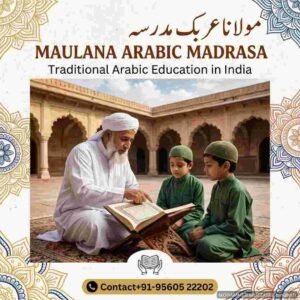
Understanding the evolution of classical Islamic learning in the Indian subcontinent requires appreciating the institutions that formalized religious sciences and linguistic mastery across generations. When scholars and educators examine the historical turning points of institutional Arabic instruction, the enduring influence of the Calcutta Madrasa Legacy stands out as a pivotal chapter in traditional pedagogy. Carrying forward the spirit of the Calcutta Madrasa Legacy, Maulana Arabic Madrasa in New Delhi provides a disciplined, authentic sanctuary where students master classical Arabic grammar, Quranic exegesis (Tafseer), prophetic traditions (Hadith), and Islamic legal theory (Fiqh). Located in South Delhi, our academy connects contemporary learners with this centuries-old scholastic lineage, ensuring that sacred learning remains rigorous, spiritually grounding, and practically relevant for the modern world.
The Historical Significance of Institutional Islamic Education
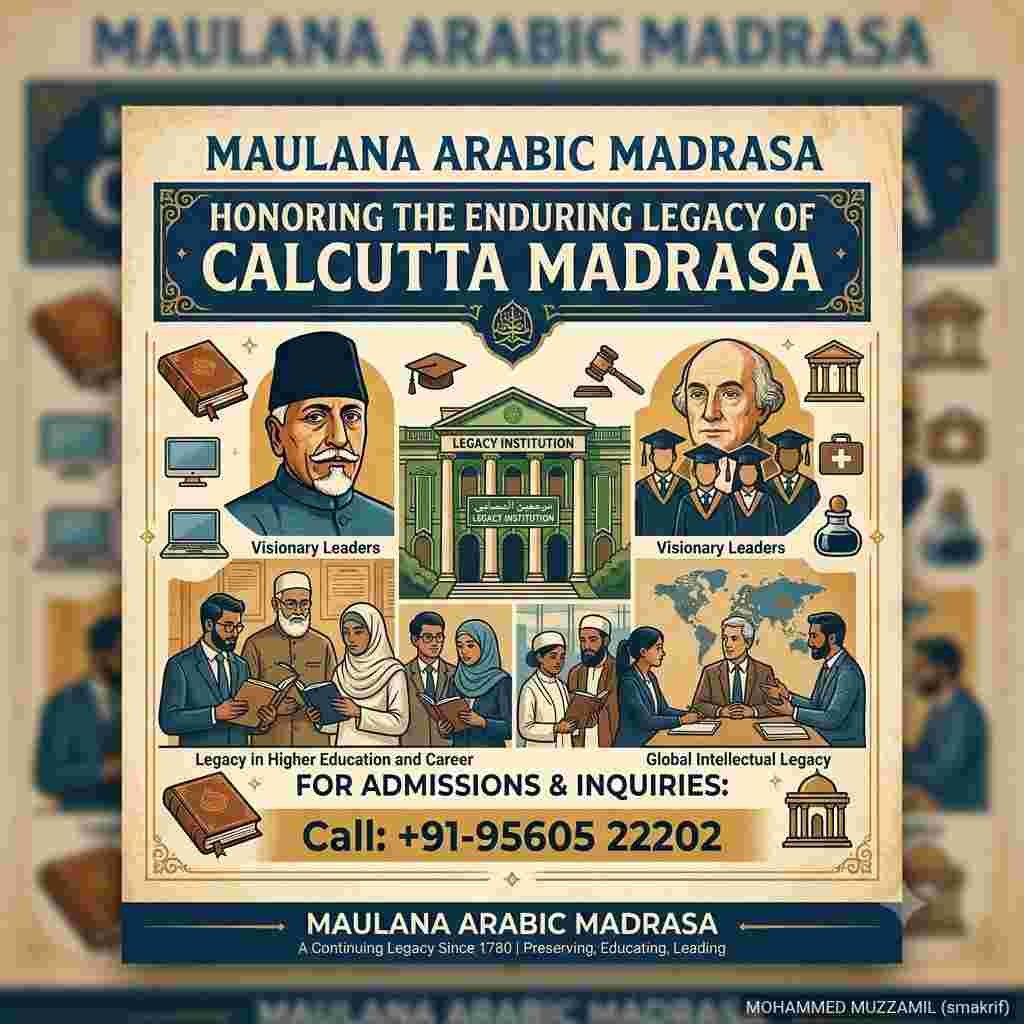
The formalization of madrasa education in the late eighteenth century created a structured bridge between traditional scholarship and institutional academics. By organizing classical subjects into defined syllabi, early seminaries demonstrated that classical Arabic, Islamic jurisprudence, and rational sciences could flourish in structured classroom settings without losing their spiritual depth.
Connecting modern educational programs with the venerable Calcutta Madrasa Legacy safeguards students against superficial shortcuts that bypass syntactic and theological foundations. Classical learning is not about passive memorization; it is an active intellectual tradition that trains students to read unvocalized manuscripts, evaluate jurisprudential arguments, and articulate balanced perspectives in an ever-changing world.
Scholarly Lineage and Certified Mentorship
At Maulana Arabic Madrasa, our educational authority is rooted in our dedicated faculty board. Our instructors comprise seasoned Islamic scholars (Ulema), certified Qaris, and dedicated female educators (Alimahs) who carry authentic chains of scholarly transmission (Ijazahs) from renowned traditional seminaries.
Reflecting the pedagogical values central to the Calcutta Madrasa Legacy, our faculty members serve as compassionate mentors rather than distant lecturers. They guide students through line-by-line textual analysis, encouraging analytical debate and clear logical deduction. Under their patient supervision, students not only master complex linguistic and legal arguments but also internalize humility, god-consciousness (Taqwa), and refined moral conduct (Akhlaq).
Comprehensive Core Curriculum: Rooted in Classical Tradition
Drawing inspiration from the comprehensive curricular standards celebrated throughout the Calcutta Madrasa Legacy, our academy delivers a systematically organized learning pathway spanning foundational to advanced sciences:
Classical Arabic Morphology & Syntax (Sarf & Nahw): Intensive foundational training enabling learners to decode word derivations, understand grammatical case endings (I’rab), and read unvocalized Arabic texts with precision.
Quranic Exegesis & Hermeneutics (Usool-al-Tafseer): Line-by-line study of classical commentaries, linguistic analysis of divine rhetoric, and historical contexts of revelation (Asbab al-Nuzul).
Hadith Compilation & Transmission (Usool-al-Hadith): In-depth textual readings of canonical compilations, chain analysis (Isnad), and the critical evaluation of narrators.
Islamic Jurisprudence & Legal Theory (Fiqh & Usool-al-Fiqh): Systematic study of authentic legal rulings covering daily worship, family law, financial transactions, and comparative legal logic.
Logic, Rhetoric & Islamic Creed (Mantiq, Balaghah & Aqeedah): Equipping students with formal philosophical reasoning and orthodox theology to articulate Islamic truths clearly and coherently.
A Disciplined Daily Blueprint for Character and Leadership
Preserving the profound ethos of the Calcutta Madrasa Legacy means treating character cultivation (Tarbiyah) and academic rigor as inseparable partners. Maulana Arabic Madrasa maintains a disciplined daily routine designed to build lifelong habits of focus and devotion:
Step 1: Congregational Prayers: Developing a lifelong commitment to offering all five daily prayers in congregation to cultivate natural mindfulness and spiritual discipline.
Step 2: Early Morning Revision (Mutala’ah): Dedicated post-Fajr study sessions where learners review upcoming classical manuscripts when the mind is clearest.
Step 3: Line-by-Line Textual Breakdown: Interactive classroom lectures involving textual translation, grammatical parsing, and thematic discussion with faculty.
Step 4: Weekly Debates and Oratory Circles: Regular speaking workshops that train students to research, prepare, and deliver articulate discourses addressing real-world concerns.
Authentic Reference Libraries and Manuscript Facilities
Navigating classical Islamic literature requires access to authentic commentaries, historical lexicons, and verified print editions. Honoring the academic depth of the Calcutta Madrasa Legacy, Maulana Arabic Madrasa provides an extensive library that bridges historic manuscripts with modern pedagogical aids.
Our campus reading rooms house classical Arabic manuscripts, multi-volume commentaries, and contemporary academic publications. This rich repository ensures that students have immediate access to primary sources, allowing them to verify texts, compare classical juristic opinions, and conduct meaningful independent research.
Adapting Classical Wisdom for Contemporary Learners
While our curriculum remains faithful to classical roots, our delivery methods embrace modern pedagogical efficiency. We recognize that students and working professionals balance diverse commitments, which is why our courses feature flexible schedules.
To ensure that the blessings of the Calcutta Madrasa Legacy remain accessible to everyone, our academy offers hybrid learning options. Students living outside Delhi or managing work responsibilities can access live interactive lectures, review digital archives, and submit assignments through our dedicated online learning portal.
Safe, Serene, and Gender-Segregated Campus Infrastructure
Deep reflection and intellectual focus require a clean, secure, and respectful learning environment. Operating a well-equipped campus, we provide spacious classrooms, dedicated study halls, and completely segregated facilities for male and female learners.
Reflecting the integrity of the Calcutta Madrasa Legacy, female classes are taught and managed entirely by qualified female scholars (Alimahs). Located in a calm residential area of South Delhi, the campus features 24/7 security, clean amenities, and easy connectivity to major transit networks.
A Trusted Pillar of Scholarly Excellence
Over the years, Maulana Arabic Madrasa has established itself as an authentic beacon of classical Islamic learning. By advancing the high standards of the Calcutta Madrasa Legacy, our institution has produced upright graduates who serve as teachers, translators, researchers, and community leaders across India and abroad.
Choosing to study at our center means becoming part of an educational movement that has enlightened hearts and minds for generations. We take pride in equipping every student with sound scholarship, sincere faith, and the capacity to serve society with wisdom and compassion.
Frequently Asked Questions (FAQs)
Q1: What is the core importance of the traditional curriculum today?
The traditional Dars-e-Nizami framework trains students in Arabic grammar, logic, and philosophy before advancing to primary sources of Hadith and Tafseer, giving them the tools to understand texts without relying purely on secondary translations.
Q2: Are foundational courses available for beginners with no prior background?
Yes. We offer foundational modules covering basic Arabic literacy, Tajweed, and introductory morphology for students who are beginning their studies from scratch.
Q3: Does the madrasa provide residential boarding facilities?
Yes, we provide clean, secure boarding accommodations with supervised study hours, disciplined routines, and nutritious meals for outstation students.
Q4: Are there dedicated programs for female students?
Yes, absolutely. We offer completely independent, segregated learning spaces and online streams for female students, taught exclusively by qualified Alimahs.
Connect with Our Admissions Team Today
Take the definitive step toward acquiring authentic, classical sacred knowledge. Upholding the venerable standards of the Calcutta Madrasa Legacy, Maulana Arabic Madrasa invites you to visit our campus or connect with our admissions team to learn more about our upcoming batches:
📍 Campus Address: Maulana Arabic Madrasa, Rz 2054 Street no 27 Tughlakabad extension New Delhi 110019
📞 Official Contact Number: +91-95605 22202
📧 Official Academic Email: maulanaarabicidara@gmail.com
🌐 Official Web Portal: www.maulana.in
Do not leave your linguistic and spiritual education to unverified internet materials or fragmented routines. Partner with Maulana Arabic Madrasa, immerse yourself in this timeless tradition, and build a lasting connection with authentic sacred scholarship today!