Elevating Women’s Islamic Scholarship: Why the Arabic Madrasa for Girls Delhi at Maulana Arabic Madrasa Stays Unmatched
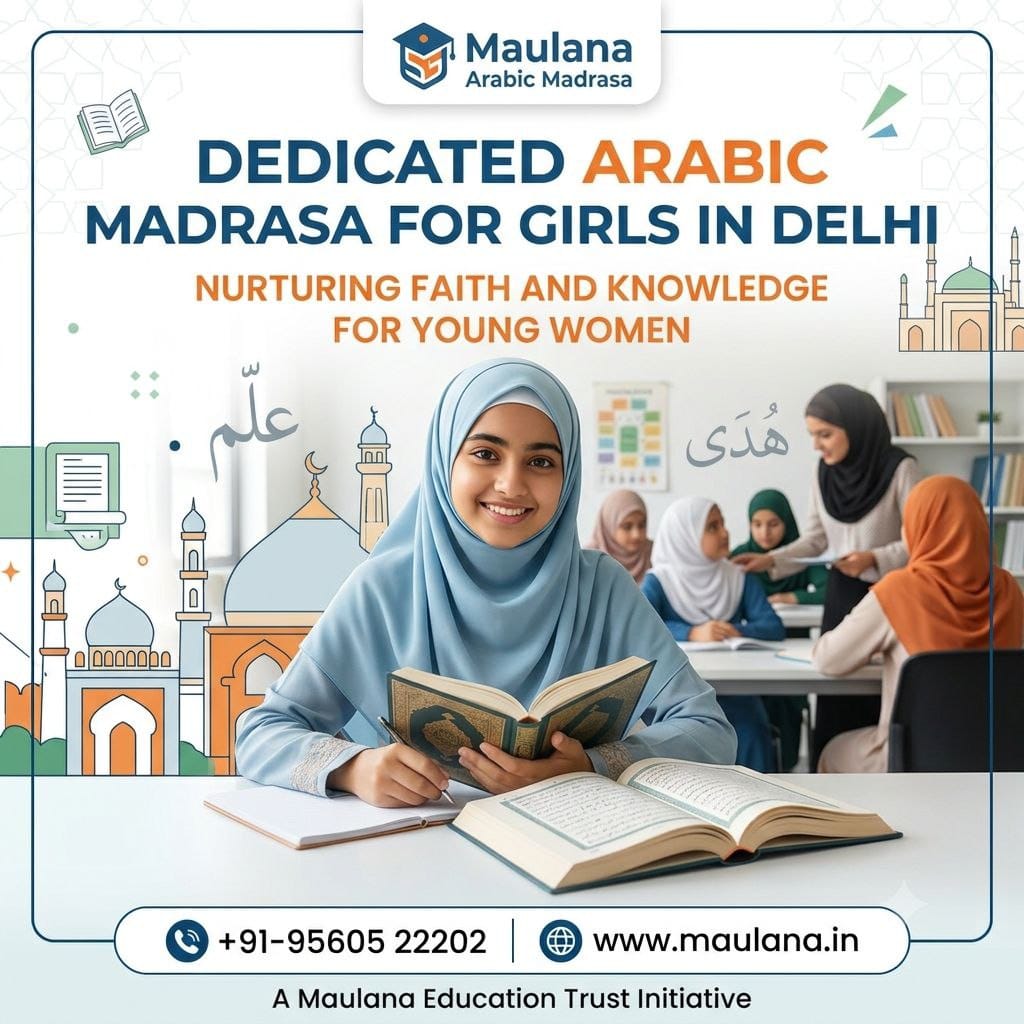
In an ever-evolving digital world, preserving a genuine attachment to authentic religious knowledge is a major priority for families across the globe. Recognizing the growing demand for proper spiritual guidance, Maulana Arabic Madrasa has established a premier Arabic Madrasa for Girls Delhi system designed to provide deep, rule-based education in Islamic sciences. Choosing our flagship Arabic Madrasa for Girls Delhi program allows school students, university academics, and busy homemakers to easily dive into professional Quranic studies, classical Arabic grammar, and jurisprudence while handling their daily career or family workflows. Operating out of a safe, state-of-the-art campus center, our academy gracefully balances standard traditional values with contemporary educational technologies, ensuring that every female learner finds a reliable space to cultivate their scholarly capabilities and strong moral character. The Generational Significance of Specialized Female Islamic Seminaries In traditional Islamic architecture, women hold the honored status of being the first school for the community—the Madrasat-ul-Ula—serving as the primary engine for values, ethics, and character building within the household. Empowering young women with systematic, text-based access to the Quran and the Sunnah ensures that whole families grow up with sound, mature, and verified understanding.Moreover, a dedicated female academic institution offers a comfortable, private environment where ladies can study and openly ask questions regarding complex social, personal, or legal issues without any awkwardness. By staying away from confusing web videos or fragmented online articles, students inside a structured institute receive a fully balanced, classical education that protects them from misleading modern ideas and prepares them to be confident leaders. Authentic Guidance Under Certified Alimahs and Specialized Mentors At Maulana Arabic Madrasa, educational excellence is maintained through a very strict selection of teachers. All dynamic learning plans and intensive discussion modules are managed entirely by highly qualified female Islamic scholars (Alimahs and Muftiyyahs) who hold recognized certifications (Ijazahs) from historic traditional institutions.Our instructors focus on building real connections as spiritual coaches rather than running dry, mechanical textbook lectures. They excel at simplifying heavy grammatical frameworks and deep jurisprudential rules into clear, structured, and easy-to-remember modules. Under their direct daily supervision, students learn how to connect timeless prophetic traditions with modern public life, growing a personal character defined by true modesty, deep devotion (Taqwa), and complete respect for family principles. A Multi-Tiered Structural Syllabus: Alimah Studies, Hifz, and Tajweed Our core educational framework at the Arabic Madrasa for Girls Delhi regional center is intentionally built to guide learners systematically from beginner foundations to independent scriptural exploration:The Intensive Alimah Path: A deep 3 and 5-year track tracking the key systems of classical Arabic, focusing heavily on Sarf (word structure) and Nahw (sentence grammar). This strong skill set allows female scholars to independently interpret complex legal books, prophetic narrations (Hadith), and historical Quranic commentaries (Tafseer).Elite Hifz & Tajweed Practice: Highly organized, slow-paced memorization schedules monitored by expert female Qaris to master precise phonetic sounds and exact rules of articulation (Makharij), ensuring a highly melodious and correct recitation style.Practical Islamic Law (Fiqh & Aqeedah): Clear, structured deep-dives into traditional Hanafi jurisprudence covering daily prayers, purification methods, legal family structures, and the basic principles of healthy Islamic creed. Personalized Mentorship Standards and Quality Evaluation Audits We believe that true spiritual and scholarly development thrives on direct, focused human attention rather than chaotic, crowded lecture halls. The Arabic Madrasa for Girls Delhi platform applies interactive, highly personalized testing and monitoring systems to guarantee student success:Live Sound Monitoring: During oral Quran or text reading sessions, female educators provide immediate feedback to correct subtle phonetic mistakes or translation flips instantly.One-on-One Problem Tracking: Special private session windows are regularly opened for students who need more time to absorb sophisticated language systems or detailed jurisprudential concepts.Strict Curriculum Reviews: Every lecture plan and video asset goes through an independent review process by our senior academic panel to ensure it perfectly matches established prophetic ethics and traditional boundaries. Deeply Integrated Hybrid Study Models for Global Access We completely realize that modern academic calendars, demanding university hours, professional office assignments, and home care jobs can make it hard to commit to a strict, rigid on-campus timetable. To create absolute access to sacred knowledge, our Arabic Madrasa for Girls Delhi model runs on a highly advanced hybrid platform.If an unexpected personal task makes it difficult to travel to our physical campus, a student can simply open her custom online dashboard to stream clean, high-definition recorded archives at any time. The global network functions flawlessly across multiple time zones, opening a beautiful path for busy women across India, the Middle East, the UK, and North America to keep up continuous, systematic spiritual study directly from home. A Safe, Peaceful, and Secure Physical Campus Facility For families who favor classical, face-to-face learning dynamics, our physical headquarters provides a quiet, well-protected, and welcoming space. The center features comfortable, multimedia-equipped classrooms, private research areas, and an extensive library collection of authentic Arabic and Urdu reference works.Located in a stable residential layout of South Delhi close to central transit options, the facility ensures smooth, fast, and stress-free daily travel for local commuters. The physical design honors traditional privacy rules, allowing young girls and adult women to focus fully on their academic goals with complete peace of mind and comfort. A Trusted Name in True Spiritual Transformation Over many successful years, Maulana Arabic Madrasa has secured its place as a trusted household name across the region, helping thousands of students establish authentic values (Tarbiyat) alongside strong intellectual maturity. The excellent history of our proud Alimah graduates stands as an inspiring baseline for new aspirants.Our balanced structure combines timeless, text-grounded scholarship with modern accessibility tools, helping women stay fundamentally anchored in moral strength as they move through modern professional or academic environments. Registering for our leading Arabic Madrasa for Girls Delhi intake means selecting a strategic, fully verified roadmap to internal clarity and long-term purpose. Simple, Fast, and Clear Admission Enrollment Steps Admissions for the upcoming new term at the Arabic Madrasa for Girls Delhi campus are now officially open. To guarantee that our expert female