
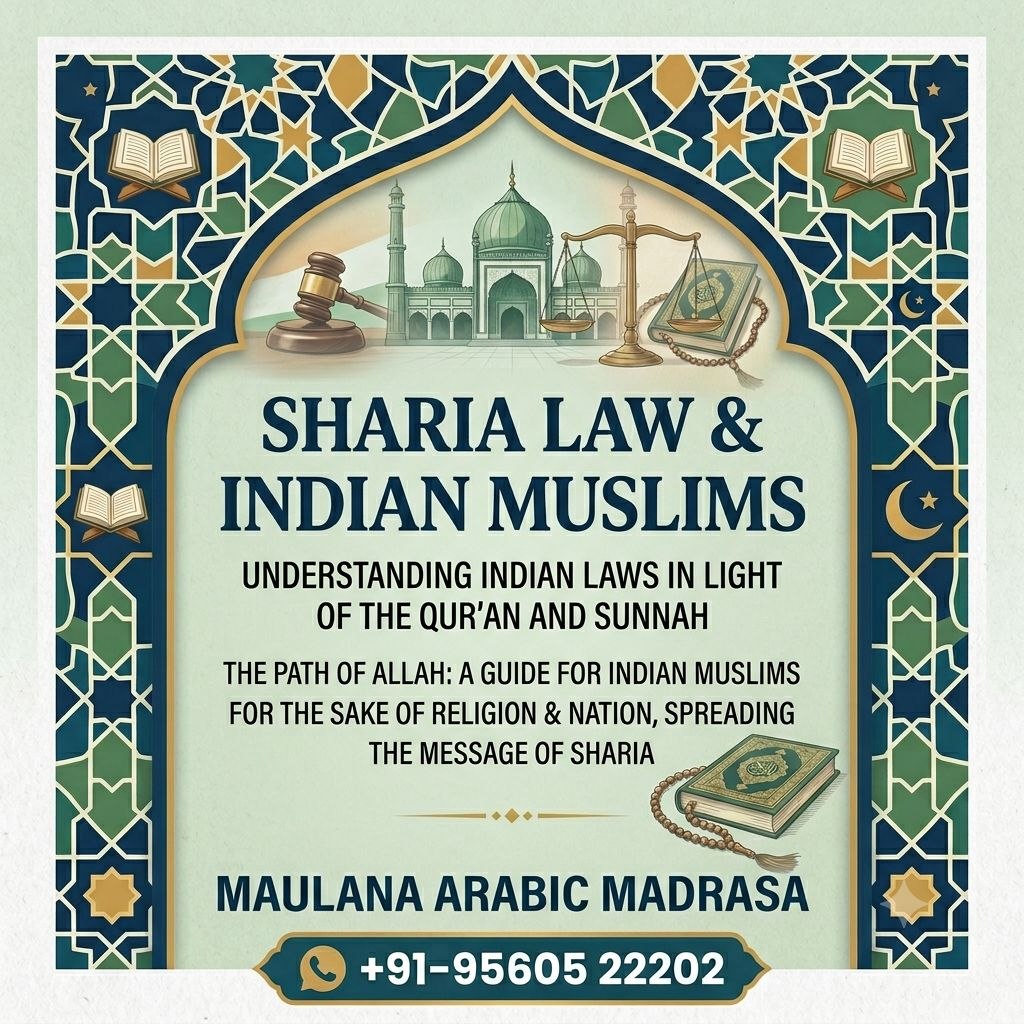
Navigating the legal framework of personal matters can be complex, especially when balancing religious traditions with constitutional statutes. For an individual practicing Islam, understanding how Sharia law India Muslim jurisprudence operates within the secular legal system is essential for protecting family rights, inheritance, and marital obligations. In the contemporary legal landscape, the application of Sharia law India Muslim regulations governs critical aspects of civil life, ensuring that religious identity and legal protections coexist harmoniously.
At Maulana Arabic Madrasa, we believe that authentic Islamic education combined with structural legal awareness empowers the community. This comprehensive guide explores how Islamic personal law is recognized, practiced, and applied within the Indian judicial framework.
The Legal Framework of Muslim Personal Law in India
In India, civil matters such as marriage, divorce, inheritance, and guardianship are governed by personal laws based on religious texts and customs rather than a singular civil code.
The Application Act of 1937: The Muslim Personal Law (Shariat) Application Act, 1937, mandates that Muslims in India are governed by Islamic jurisprudence in personal matters.
Constitutional Protection: Article 25 of the Indian Constitution grants citizens the freedom of conscience and the right to freely profess, practice, and propagate religion.
The Role of Darul Qaza: While state courts hold formal jurisdiction, family disputes are frequently reviewed by traditional arbitration councils or Sharia courts for community-based resolution.
Marriage (Nikah) and Dissolution Under Sharia Provisions
Under Islamic jurisprudence, marriage is treated as a solemn civil contract (Mithaq) rather than a sacrament, giving it unique characteristics under Indian family law.
📄 The Essential Elements of Nikah
For a marriage to be legally and religiously valid, it requires mutual consent (Ijab-o-Qubool), adult witnesses, and the stipulation of Mahr (dower)—a financial security guaranteed directly to the bride.
⚖️ Recognizing Rights in Divorce
Islamic law provides structural methodologies for the dissolution of marriage. While unilateral forms of divorce have faced legislative reforms in recent years, traditional routes like Khula (divorce initiated by the wife) and Mubarat (mutual separation) remain valid and legally supported.
Succession, Wills, and Wealth Distribution
Inheritance under traditional Islamic jurisprudence follows strict, mathematically defined portions laid out in foundational religious texts, ensuring family members are not completely disenfranchised.
Fixed Sharers: Close relatives such as parents, spouses, and children have designated minimum fractions of an estate that cannot be altered by a written will.
The One-Third Rule: A practicing Muslim can only distribute a maximum of one-third of their total property via a written will (Wasiyat) to individuals who are not automatic legal heirs.
Protection of Assets: These rules prevent the arbitrary exclusion of immediate family members from financial security after an individual’s passing.
The Crucial Role of Authentic Islamic Education
Understanding the intersection of faith and legal compliance requires guidance from knowledgeable scholars. Misinterpretations can often lead to unnecessary legal and spiritual disputes.
By pursuing structured studies in Fiqh (Islamic jurisprudence) and Arabic text analysis, individuals can accurately interpret scripts without relying on external misconceptions. Maulana Arabic Madrasa offers specialized courses designed to help both men and women master these foundational principles, ensuring family practices align with authentic traditions and structural legal realities.
Connect with Maulana Arabic Madrasa
For inquiries regarding our online Islamic studies, Fiqh courses, or to consult our academic faculty, feel free to reach out to us:
📱 Phone / WhatsApp: +91-95605 22202, +91-84476 15753
📧 Email: maulanaarabicidara@gmail.com
🌐 Website: www.maulana.in
📍 Head Office: Maulana Arabic Idara, RZ-2054, TKD Extension, Near Tara Apartment, New Delhi – 110019