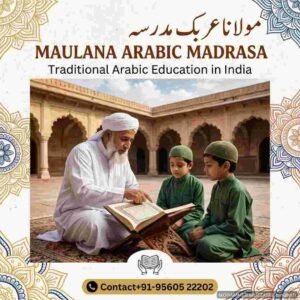
When exploring the history and structure of religious education in Islam, a common question many people ask is: What is Madrasa? To put it simply, the term refers to an educational institution dedicated to teaching Islamic studies, Quranic sciences, Arabic grammar, and moral values. However, if you truly want to understand What is Madrasa in a broader context, it is helpful to look at how these centers preserve sacred heritage while guiding students toward intellectual clarity, noble character, and spiritual excellence. At Maulana Arabic Madrasa, we provide a welcoming environment where learners of all ages can discover the beauty of traditional Islamic knowledge.
What is Madrasa and How Did It Originate?
To appreciate the role of these institutions today, we must look back at their rich historical roots. The word itself comes from the Arabic root da-ra-sa, which means “to learn” or “to study.” Literally, it translates to “a place of learning.”
In the early centuries of Islam, classes were held in community mosques, houses of scholarship, or informal study circles. Over time, as communities grew and formal curricula developed, dedicated academies emerged across the Muslim world. These institutions served as dynamic centers of learning, producing world-renowned scholars, jurists, linguists, and philosophers. Understanding this heritage reveals that these centers have always been pillars of literacy, moral discipline, and community development.
Key Components of a Traditional Curriculum
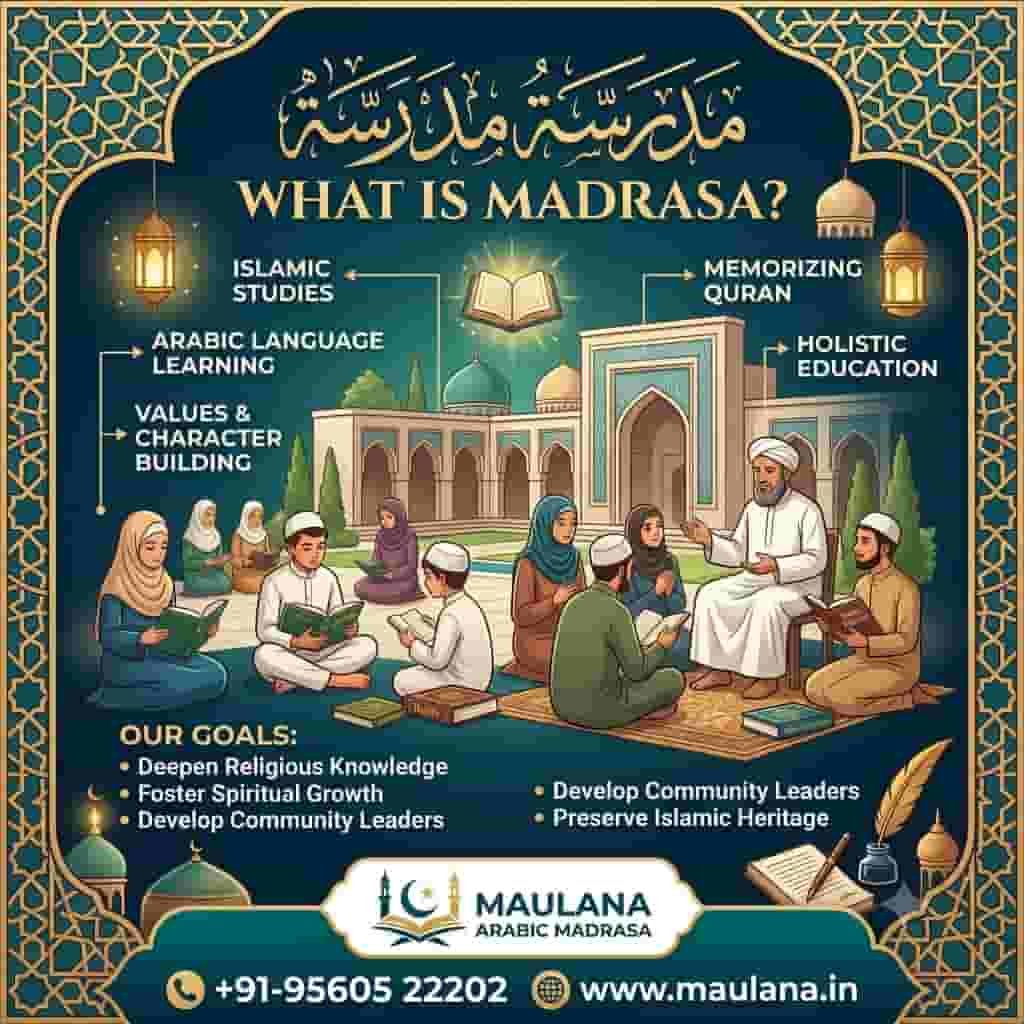
When asking What is Madrasa education composed of, it helps to break down the core subjects taught by qualified scholars (Ulama). The curriculum is structured step-by-step, taking students from elementary reading to advanced textual analysis.
📜 Quranic Studies: Tajweed, Hifz, and Tafseer
The Holy Quran sits at the absolute center of all learning. Students begin with fundamental phonetics (Makharij) to ensure accurate recitation, then progress to structured memorization (Hifz). Advanced students dive into Tafseer, which explores the context and deeper meanings of the verses.
💬 Classical Arabic Language and Literature
Because classical texts are written in Arabic, mastering the language is essential. Students learn grammar (Nahw), morphology (Sarf), and vocabulary, allowing them to read, write, and analyze classical Islamic literature independently without relying solely on translations.
⚖️ Islamic Jurisprudence (Fiqh) and Ethics (Akhlaq)
Practical guidance for daily living is another key pillar. Through Fiqh, students learn the rules surrounding daily worship, family life, business transactions, and social responsibilities. Akhlaq focuses on developing humility, honesty, patience, and good manners.
Why Understanding What is Madrasa Education Matters Today
In our modern world filled with digital distractions and conflicting information, many families wonder: What is Madrasa learning able to provide that general education cannot? The answer lies in holistic character development and spiritual grounding.
* 🎓 Preservation of Sacred Traditions: It ensures that authentic, chain-transmitted knowledge (Isnad) is preserved accurately across generations.
* 🌿 Character Building: Lessons emphasize humility, respect for elders, community service, and personal responsibility.
* 🤝 Sense of Belonging: Students become part of a supportive learning community that encourages spiritual growth and intellectual curiosity.
* ⏰ Flexible Schedule Options: Modern centers offer part-time, morning, evening, and weekend batches so that school students and working adults can pursue religious studies alongside their regular routines.
How Maulana Arabic Madrasa Empowers Learners
At Maulana Arabic Madrasa, we take pride in offering an authentic, supportive environment where learners receive individual care and attention. Understanding What is Madrasa learning in practice means experiencing how dedicated teachers mentor each student patiently.
* Qualified Instructors: Our scholars bring years of traditional scholarship and practical teaching experience.
* Small Class Sizes: Every student receives personal focus to refine their Quranic recitation, accent, and conceptual understanding.
* Balanced Approach: We maintain classical depth while adopting modern teaching methodologies to keep lessons engaging and relevant.
Knowing What is Madrasa culture helps parents make informed decisions about their children’s spiritual and moral upbringing. When you join our institution, you enter a family dedicated to moral integrity and academic discipline.
Visit Our Campus or Connect with Admissions
If you or your family members are interested in exploring our structured Quranic, Arabic, and Islamic studies programs, we welcome you to visit us or reach out to our team.
For anyone asking What is Madrasa life like at Maulana Arabic Madrasa, our campus doors are open for counseling, guided tours, and enrollment inquiries.
📌 Contact Information:
* Address: Rz 2054 Street no 27 Tughlakabad extension New Delhi 110019
* Phone Number: +91-95605 22202
* Email Address: maulanaarabicidara@gmail.com
Frequently Asked Questions (FAQs)
❓ Q1: What is Madrasa education, and who can enroll?
A: It is a structured educational system focused on teaching Quranic recitation, Tajweed, Classical Arabic, and Islamic ethics. Our programs are open to children, teenagers, and working adults at beginner, intermediate, and advanced levels.
❓ Q2: What is Madrasa learning’s main difference from a regular school?
A: While regular schools focus primarily on secular academic subjects, these institutions specialize in sacred knowledge, spiritual development, Arabic linguistics, and Islamic moral ethics. Many students attend both by taking part-time or weekend classes.
❓ Q3: Do I need prior knowledge of Arabic to join?
A: No prior background is needed. We offer foundational courses starting from basic alphabet recognition and pronunciation before progressing to advanced grammar and reading.
❓ Q4: What is Madrasa class timing like for working professionals?
A: We offer flexible morning, evening, and weekend schedules tailored specifically for adults, college students, and working professionals who want to balance their daily routines with structured learning.
❓ Q5: How long does it take to learn basic Arabic grammar and Quranic reading?
A: Most dedicated students build a solid foundation in Quranic reading and basic Arabic grammar within 6 to 12 months of consistent practice.
Begin Your Learning Journey Today
Understanding What is Madrasa education reveals its vital role in nurturing minds, building moral character, and strengthening faith. Contact Maulana Arabic Madrasa today via phone or email to learn more about our upcoming batch schedules, course details, and registration process!